
Thursday, October 30, 2014
The Addiction Carousel: Substituting Addictions
Many people in early recovery are warned about substituting addictions. Substituting an addiction is defined as replacing an old addiction with a new addiction that the individual didn’t have previously. However, a case where someone has a co-occurring disorder, and one of those disorders or addictions grows after another is eliminated, wouldn’t be labeled as a substitution.
Substituting addictions in recovery is a common occurrence, and most people battling addictions have seen this take place within themselves or someone else. Someone who had a heroin addiction gets sober and starts drinking more. An alcoholic who quits drinking and starts binge eating. Substitutions of this nature are common.
So how many categories of addictions are there? According to Dr. Steven Sussman, there are 11. Dr. Sussman co-authored a paper in which he categorizes 11 “relatively common behaviors” as addictions. These common behaviors are: tobacco use, alcohol use, illicit drug use, binge eating, gambling, internet use, love, sex, exercise, work, and shopping. Any of these behaviors can count as addictions. If any are incorporated into a person’s life after giving up an addiction, and they culminate into a new addiction, that constitutes an addiction substitution.
Addiction substitutions are dangerous for those in recovery. Even if the substitution is a “safer” addiction, like going from heroin addiction to a work addiction, having an addiction at all is obviously negative. Any of the above mentioned addictions pose a threat to a person’s quality of life. A recovering addict should be mindful of other potential addictions, and make sure they stay off of the addiction carousel.
Wednesday, October 29, 2014
The Link Between Child Abuse, Substance Abuse and Relapse
It is well known that relapse is common for those in early recovery from addiction. Also well known is that those with a history of child abuse are more likely to abuse substances in adulthood. A recent study now links the two - showing that those with history of substance abuse who are in early recovery have a higher propensity for relapse.
New York University School of Medicine and Yale University School of Medicine researchers published their recent findings in the American Medical Association journal, JAMA Psychiatry, showing the link between the two and highlighting the potential difficulty of treating adult addicts with a history of abuse. The researchers used MRI scans to look at the brains of 79 people in substance abuse treatment, some with a history of child abuse and others without. The researchers looked for changes in the brain previously associated with an increased risk for substance abuse relapse. They found these changes to be more prevalent among those who had a history of child abuse. The research showed that the increased risk of relapse pertained to all addictive substances. The study also noted that as many as 5 out of 10 people who experience neglect or childhood abuse will develop substance abuse problems and will have a high rate of relapse.
The findings also discussed the challenge of having effective treatment for those with child abuse in their history because the relapse potential is so high. However, addiction treatment centers like Harmony Foundation already consider abuse history when crafting treatment plans for new clients and programs for those who had relapsed. Because the rate of relapse is high for those in early recovery in general let alone those with a history of abuse, offering relapse prevention groups and therapeutic opportunities to recognize and face triggers is essential in addiction treatment.
New York University School of Medicine and Yale University School of Medicine researchers published their recent findings in the American Medical Association journal, JAMA Psychiatry, showing the link between the two and highlighting the potential difficulty of treating adult addicts with a history of abuse. The researchers used MRI scans to look at the brains of 79 people in substance abuse treatment, some with a history of child abuse and others without. The researchers looked for changes in the brain previously associated with an increased risk for substance abuse relapse. They found these changes to be more prevalent among those who had a history of child abuse. The research showed that the increased risk of relapse pertained to all addictive substances. The study also noted that as many as 5 out of 10 people who experience neglect or childhood abuse will develop substance abuse problems and will have a high rate of relapse.
The findings also discussed the challenge of having effective treatment for those with child abuse in their history because the relapse potential is so high. However, addiction treatment centers like Harmony Foundation already consider abuse history when crafting treatment plans for new clients and programs for those who had relapsed. Because the rate of relapse is high for those in early recovery in general let alone those with a history of abuse, offering relapse prevention groups and therapeutic opportunities to recognize and face triggers is essential in addiction treatment.
Thursday, October 23, 2014
Risk of Opiates Outweigh Benefits
The painkiller epidemic that has swept across the U.S. in the last decade is common knowledge these days. Many people have developed addictions, and many have died, from taking prescription opiates. Those in recovery are made aware of the fact that any mind altering substance will have devastating effects on their lives. While someone new to recovery may still struggle with reservations about the dangers of prescriptions, they are increasingly thought of as being as dangerous as it gets in the recovery community.
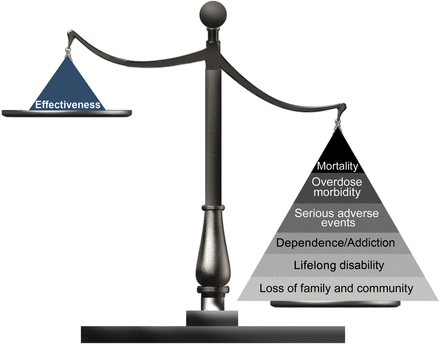
It should come as no surprise that prescription opiates pose a danger to everyone, not just addicts. In fact, the American Academy of Neurology published a position statement in their latest medical journal stating that the dangers and risks associated with taking prescription opiate drugs outweigh the benefits. This statement wasn’t referencing addiction or addicts, but everyone in general. It asserted that with the exception of cancer patients, the risk of overdose and other health problems associated with opiates outweighs the benefit of pain relief. For a person with chronic headaches or back pain for example, even the relief they may get from taking opiates isn’t enough to outweigh the associated dangers - the most glaring dangers being the propensity for addiction and accidental overdose.
With the well-respected American Academy of Neurology publishing statements on how opiates are dangerous for everyone, it underscores how particularly hazardous they are to addicts or those in recovery. In short, if they are too dangerous for the average Joe, imagine how deadly they are to addicts or alcoholics. Alternative pain management practices like acupuncture and other holistic therapies may pave they way for the future of pain management to mitigate the public risk of these dangerous drugs.
It should come as no surprise that prescription opiates pose a danger to everyone, not just addicts. In fact, the American Academy of Neurology published a position statement in their latest medical journal stating that the dangers and risks associated with taking prescription opiate drugs outweigh the benefits. This statement wasn’t referencing addiction or addicts, but everyone in general. It asserted that with the exception of cancer patients, the risk of overdose and other health problems associated with opiates outweighs the benefit of pain relief. For a person with chronic headaches or back pain for example, even the relief they may get from taking opiates isn’t enough to outweigh the associated dangers - the most glaring dangers being the propensity for addiction and accidental overdose.
With the well-respected American Academy of Neurology publishing statements on how opiates are dangerous for everyone, it underscores how particularly hazardous they are to addicts or those in recovery. In short, if they are too dangerous for the average Joe, imagine how deadly they are to addicts or alcoholics. Alternative pain management practices like acupuncture and other holistic therapies may pave they way for the future of pain management to mitigate the public risk of these dangerous drugs.
Labels:
Addiction,
American Academy of Neurology,
benefits,
dangers of opiates,
opiate addiction,
opiates,
pain management,
pain pills,
risk of prescriptions,
risks
Location:
Colorado, USA
Friday, October 17, 2014
The Dangers of Molly (MDMA)
Drugs have developed a reputation in modern society. Alcohol use is thought of as normal, while heroin is generally associated with an addict on the street. While there is some truth to stereotypes surrounding specific drugs, many are false. Molly, or MDMA, has developed a reputation among young adults as a “fun” drug. It is generally typecast as a drug young people do when at a club or music festival. It’s reputation as “fun” is dangerous.
Two young individuals overdosed on Molly earlier this year at the Electric Zoo concert in New York and earlier this month a 21 year old died after ingesting a lethal dose of Molly at the Austin City Limits Music Festival. Molly or MDMA related deaths are becoming a regular occurrence, with young adults overdosing at several festivals over the last few years. These tragedies are, in part, attributable to the general reputation of the drug - thought of as fun, and by association, safe. This couldn’t be further from the truth. Anything from gasoline to baby powder has been found to be an ingredient in Molly.
When drugs have reputations as being fun or safe it is dangerous for everyone, but especially threatening for recovering addicts. The idea that a drug, any drug, is ok in sobriety can be devastating. Some in recovery may feel that if a drug wasn’t their drug of choice, they can take it and not endure the same wrath as they did in active addiction. The age old tale of the addict who thought alcohol was ok to consume after becoming clean off of drugs is an example of this. A positive reputation being associated with a drug is menacing, especially when that drug is killing people. It’s of monumental importance is sobriety to remember, a drug is a drug is a drug - no matter its reputation.
Two young individuals overdosed on Molly earlier this year at the Electric Zoo concert in New York and earlier this month a 21 year old died after ingesting a lethal dose of Molly at the Austin City Limits Music Festival. Molly or MDMA related deaths are becoming a regular occurrence, with young adults overdosing at several festivals over the last few years. These tragedies are, in part, attributable to the general reputation of the drug - thought of as fun, and by association, safe. This couldn’t be further from the truth. Anything from gasoline to baby powder has been found to be an ingredient in Molly.
When drugs have reputations as being fun or safe it is dangerous for everyone, but especially threatening for recovering addicts. The idea that a drug, any drug, is ok in sobriety can be devastating. Some in recovery may feel that if a drug wasn’t their drug of choice, they can take it and not endure the same wrath as they did in active addiction. The age old tale of the addict who thought alcohol was ok to consume after becoming clean off of drugs is an example of this. A positive reputation being associated with a drug is menacing, especially when that drug is killing people. It’s of monumental importance is sobriety to remember, a drug is a drug is a drug - no matter its reputation.
Wednesday, October 1, 2014
Alcohol is Still the Deadliest Drug
Statistically Alcohol is still the most deadly drug in existence. Surveys polling incarcerated criminal offenders confirmed that alcohol was the mind altering substance most associated with violent crimes. TV shows and movies may indicate that cocaine, methamphetamine or heroin intoxication lead to more acts of violence, but alcohol has been shown to be the real killer.
The survey showed that among individuals incarcerated for violent crimes, around 40% had been drinking at the time they committed the crime. Alcohol consumption was most common in people committing certain crimes like murder and sexual assault. Alcohol affects everyone differently, but it generally lowers inhibitions for people across the board. Some drink and experience feelings of elation while others drink and get sad. There is also a group of people who drink and get violent. Unfortunately, this type of reaction to intoxication seems to be common, as 40% of those who have committed violent crimes were drinking and there are a lot of individuals - incarcerated or not - who have committed violent crimes.
Analysis of the survey showed that being under the influence of alcohol didn’t just make people more likely to be the perpetrator in a crime; it also made them more likely to be a victim. Almost 40% of homicide victims had alcohol in their system at the time they were murdered.
Many believe that alcohol is present in more victims and perpetrators because it is more widely available. That is true, alcohol is legal and can be bought legitimately in a wide variety of locations. However, the people who committed these violent crimes typically didn’t just have a beer with dinner. The study showed that among these perpetrators, the average blood alcohol content was more than three times the legal limit.
Alcohol intoxication isn’t just dangerous behind the wheel. Many people, with or without an alcohol addiction, go out drinking with good intentions. They want to go out and have a good time or relax. However, as the survey showed, the road to jail is paved with good intentions.
Good intentions also keep alcoholics in denial and may delay their path to alcoholism treatment. No matter how many times the alcoholic's binge with good intentions - believing they'll just go out and have a good time - they keep having the same ending which includes but is not limited to being violent, blacking out, promiscuity, fighting or becoming a victim.
Subscribe to:
Posts (Atom)